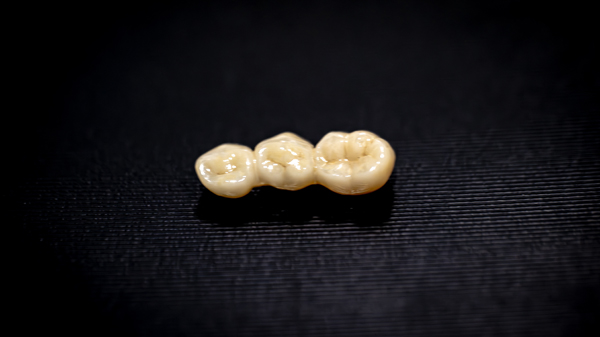
Dental bridges replace missing teeth, restoring smile appearance and bite function. They are noninvasive tooth replacements that rely on the surrounding teeth or dental implants for support. A general or cosmetic dentist will create a dental bridge custom-fit to the patient’s smile, ensuring a natural-looking restoration and optimal oral health.
A general overview of dental bridges
Dental bridges are named for the way they bridge the gap left by missing teeth. They consist of one or more artificial teeth (or pontics) anchored in place by abutments. Abutments are either adjacent natural teeth or dental implants (artificial tooth roots) that support the pontics. Depending on the patient’s preferences and the location and number of missing teeth, a dentist may offer bridges made from porcelain, ceramic, or metal.
Note that there are several types of bridges: traditional, cantilever, Maryland, and implant-supported. Traditional bridges consist of dental crowns as abutments with the pontic in between. Cantilever bridges need only one crown and adjacent tooth to support the bridge. Maryland bridges are a metal or porcelain framework bonded to the back of the adjacent natural teeth. Finally, as their name suggests, implant-supported bridges are secured to dental implants.
A general or cosmetic dentist will recommend a bridge type according to the patient's specific needs. For example, Maryland bridges are best for front teeth, while traditional bridges are better for back teeth. With each type, the aim is to restore smile function and appearance while ensuring the bridge integrates seamlessly with the surrounding teeth.
Why bridges are an effective tooth restoration treatment
Dental bridges are an effective tooth restoration treatment for several reasons. They are less invasive than implants and often more durable than removable dentures. They can last from five to 15 years with proper care.
Functionally, bridges also restore the ability to chew and speak properly, which can be compromised when teeth are missing. Gaps in the smile can make it difficult to pronounce certain words or chew food effectively, leading to discomfort or dietary restrictions. Bridges close these gaps to allow for a more natural bite and better oral function.
As for aesthetic benefits, dental bridges restore the appearance of the smile by filling in spaces left by missing teeth. This not only enhances self-confidence but also helps maintain the natural shape of the face. Missing teeth can lead to a sunken facial appearance over time, as the jawbone shrinks and facial muscles lose support. Bridges slow this process by providing structure and stability to the facial features.
Bridges also have orthodontic benefits. When a tooth is lost, the adjacent teeth may begin to drift into the empty space. This can lead to misalignment and bite issues that require orthodontic treatment, such as braces. By filling the gap, bridges maintain proper spacing and alignment and prevent the need for further treatment.
Learn more in an appointment
Dental bridges offer a practical solution for restoring missing teeth, improving both bite function and appearance. A general or cosmetic dentist can help determine if you are a good candidate for this tooth replacement. Schedule an appointment with our team at Advanced Dental Group today to begin.
Request an appointment here: https://www.dalianiknamdds.com or call Advanced Dental Group at (562) 455-1310 for an appointment in our Los Alamitos office.
Check out what others are saying about our dental services on Yelp: Dental Bridges in Los Alamitos, CA.
Recent Posts
Call us to consider dental bridges as a method for repairing your smile. We will go over the options.Dental bridges allow us to fill the gap left by a missing tooth and connect two teeth together to strengthen the implant. This dental restoration does not move or fall out of place, requiring simple levels of…
Individuals suffering from damaged or unsightly teeth may benefit from receiving dental crowns. This straightforward and relatively common procedure can help restore the look and function of healthy, natural teeth. While a variety of components may be used to form dental crowns based on the patient's individual preferences and needs, the installation process is usually…
Dental crowns are among the most common types of restorative treatments dentists provide. A crown has many uses and benefits. Not only can it restore the aesthetics of your smile, but it relieves pain, protects a damaged tooth, and prevents further problems from occurring to weak teeth. The process of getting a crown can require…
A dental crown is a device used to restore the functions and look of a tooth that has been damaged. If you need a root canal, a fractured tooth, or a big filling, your dentist may also decide to place a dental crown. The new crown covers the part of the tooth visible above the…